
Within the framework of DIRASA, major actions have been implemented to sustainably strengthen the visibility of Tunisian research and its interaction with society. At the heart of this dynamic are the creation of national thematic research networks – the Scientific Interest Groups (GIS) – and the organization of a national dialogue workshop bringing together all research stakeholders.
These actions have placed Tunisian universities at the center of research coordination dynamics by fostering closer ties between universities, research centers and units, laboratories, and socio-economic actors. The common goal is to better valorize scientific results and strengthen their contribution to the country’s development priorities.
A training week to enhance quality and international visibility
First, capacity-building actions were implemented, including a dedicated training week organized by the University of Gabès in Djerba. The aim was to strengthen the skills of researchers and university officials regarding scientific quality, research valorization, and international practices.
Facilitated with the support of European partners, this training focused on improving scientific publication processes, accessing international databases, peer-review mechanisms and strategies for research visibility. It allowed participants to acquire concrete tools to better position Tunisian research within international scientific networks and enhance its impact.
Scientific Interest Groups (GIS): national networks serving the country’s priorities
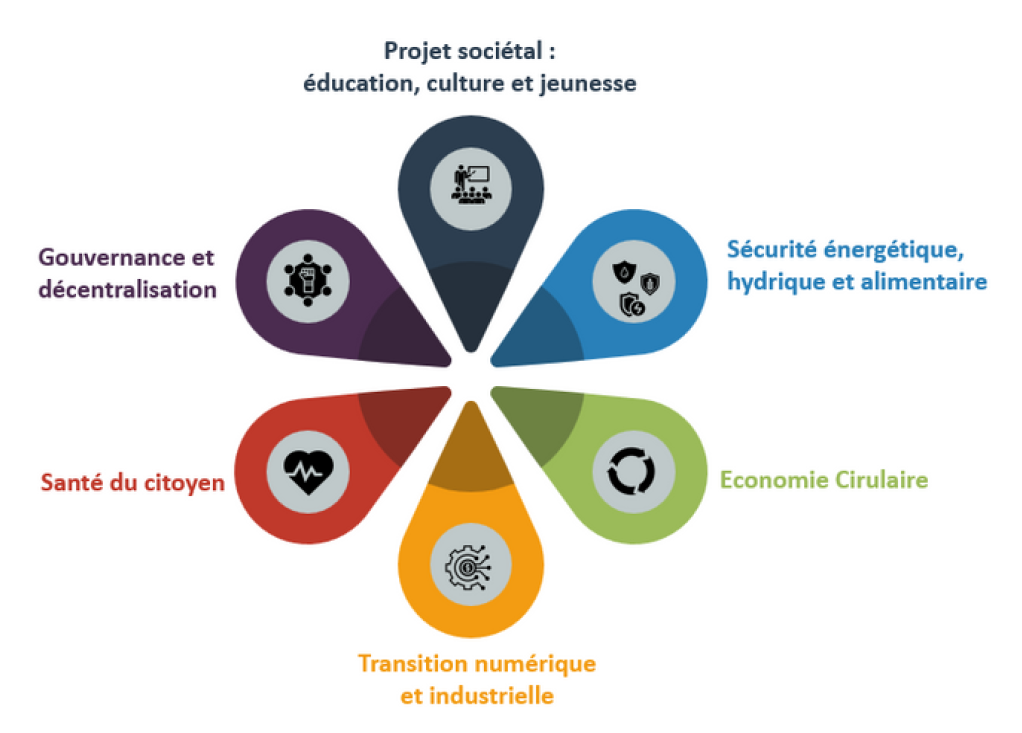
A major milestone was the creation of six Scientific Interest Groups (GIS), aligned with major national research priorities: Energy, water, and food security, Education, culture, and youth, Citizen health, Digital and industrial transition, Governance and decentralization, and Circular economy.

Each GIS brings together Tunisian universities, their laboratories and research units, as well as research centers and institutional partners. Their objective is to federate existing scientific expertise, pool infrastructures, and develop high-impact collaborative research projects.
Concretely, these networks facilitate:
- The definition of common research agendas.
- The development of national and international projects.
- The dissemination and valorization of scientific results.
- The strengthening of ties with socio-economic actors.
- The integration and training of young researchers.
The GIS thus constitute a structuring framework for research that is more coherent, interdisciplinary, and oriented towards the concrete needs of Tunisian society.
A national workshop to envision the future of Tunisian research
This structuring dynamic was accompanied by the organization of a national dialogue workshop dedicated to the future of Tunisian research. Bringing together universities, public institutions, researchers, European partners, socio-economic actors, and civil society representatives, this event was a key moment for exchange and consultation.
Discussions highlighted the importance of a more open and collaborative governance, based on national coordination, resource pooling, and the active involvement of socio-economic actors.
The signing of the GIS conventions marked a symbolic and concrete step: moving from a shared vision to a permanent organization of research around clearly identified national priorities.


A policy paper to guide future reforms
The exchanges from the workshop and the overall results of the DIRASA project were capitalized upon to develop a policy paper, drafted in collaboration with all partners.
This document serves as a reference framework intended to support decision-makers and universities in pursuing the initiated reforms. It highlights the central role of research governance as a lever for scientific quality, international visibility, and socio-economic impact, while calling for concerted action to strengthen coordination, responsible institutional autonomy, and research valorization. A national coordination for a sustainable dynamic.
National coordination to sustain achievements
To ensure the coherence and longevity of the actions undertaken, a national coordination network was established. Its role is to ensure consistency across the actions led by the different GIS and to strengthen the dialogue between universities, research structures, and national institutions.
This coordination fosters the emergence of lasting synergies, alignment with national research priorities, and the inclusion of Tunisian research in regional and international dynamics.
Through the creation of the GIS, the organization of the national workshop, and the establishment of structured coordination, the DIRASA project contributes to deeply transforming the Tunisian research ecosystem, making it more visible, more connected to society, and better prepared to face contemporary scientific and socio-economic challenges.